Lab Training: Polymer Tensile Testing, Rheometry, & SEM Microstructure
Lab Training: Polymer Tensile Testing, Rheometry, & SEM Microstructure
Hands-on laboratory training is the core of our Polymer Materials module. Students of the MSI Intake 2024 cohort recently successfully completed a series of advanced, practical lab sessions designed to characterize the mechanical, rheological, and morphological properties of polymeric macromolecules.
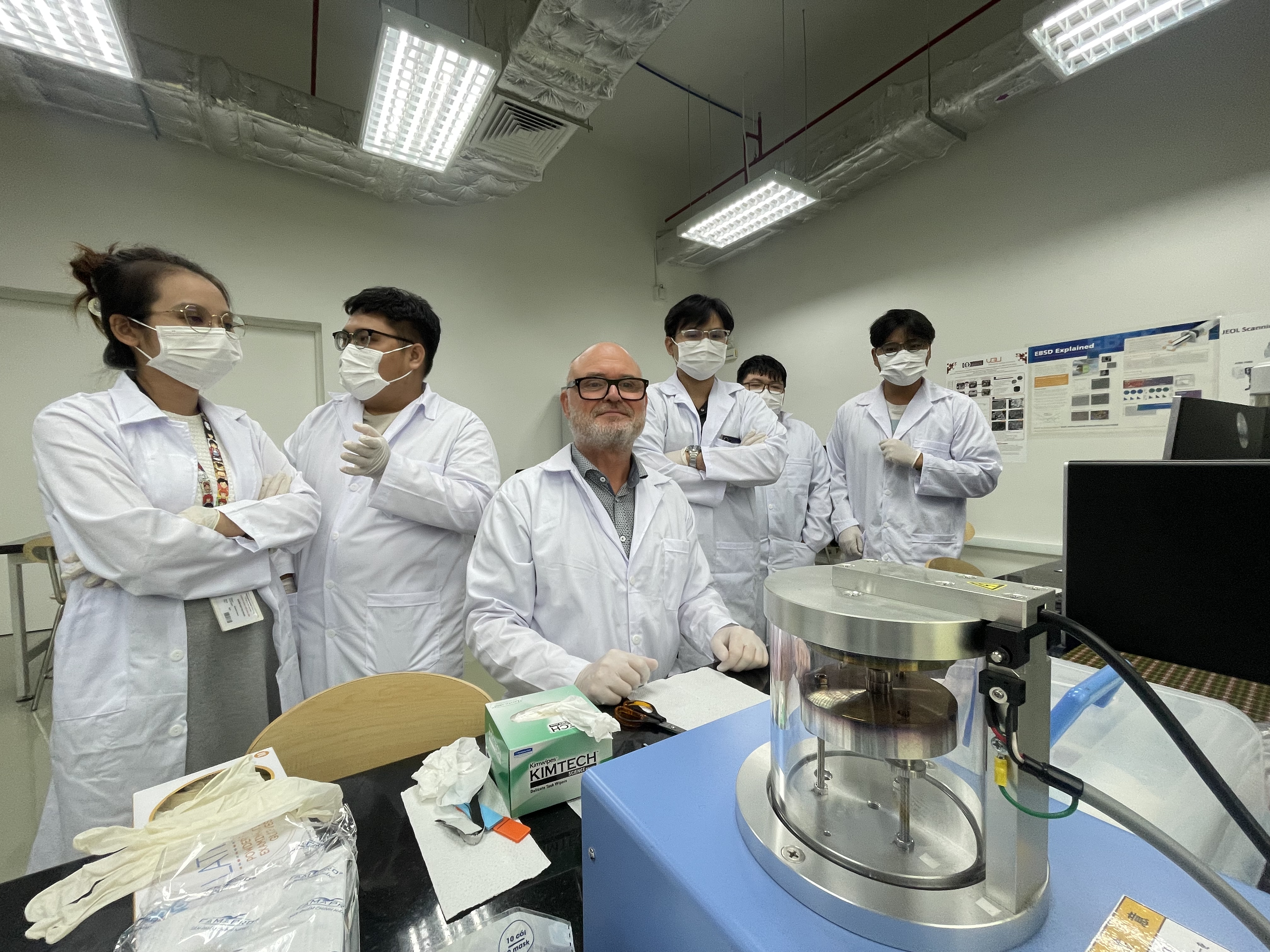
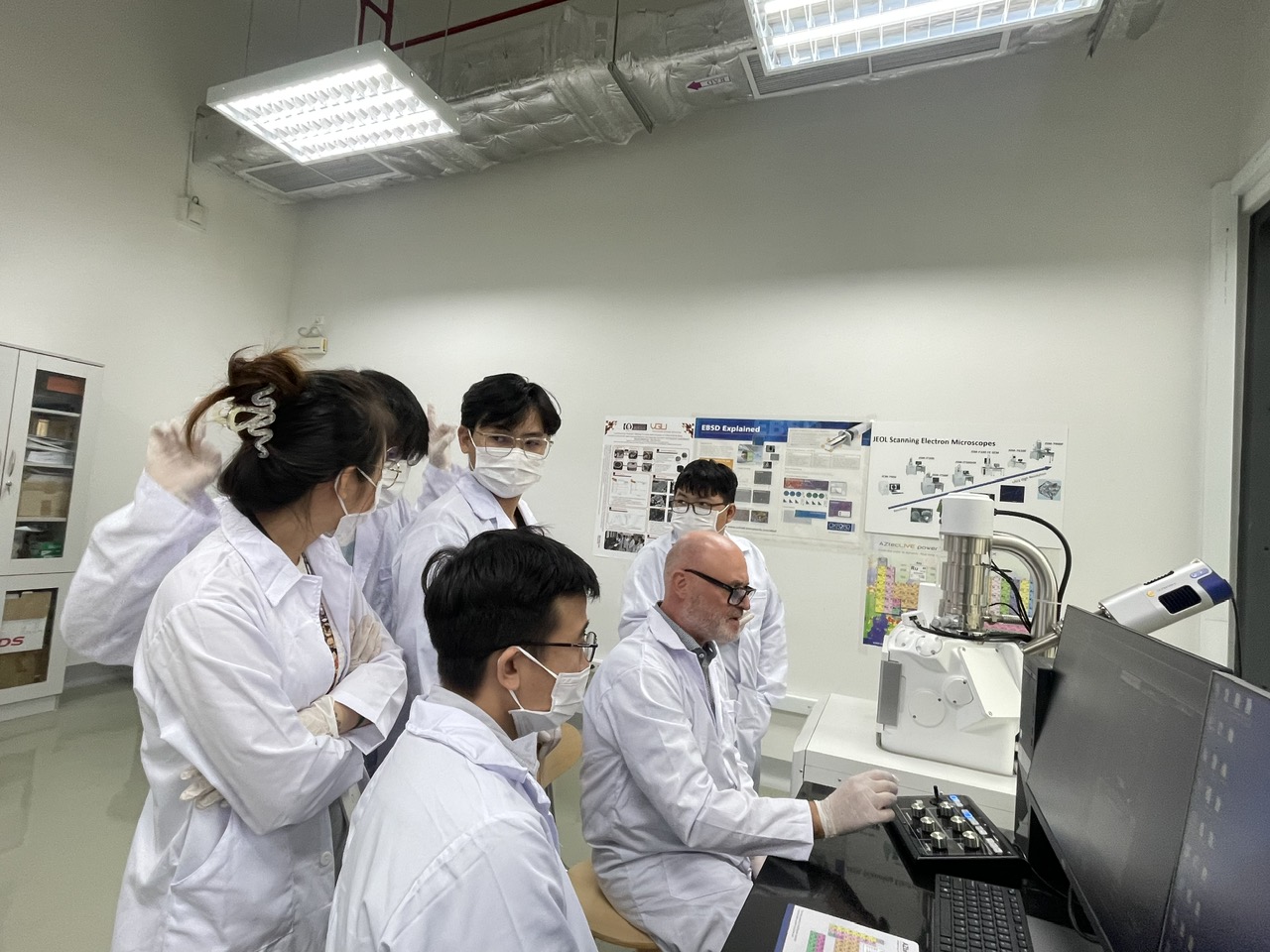
Supervised by Prof. Dr. rer. nat. Sven Henning from the Fraunhofer Institute (IMWS), Germany, students utilized high-end research equipment to connect theoretical polymer chemistry with macroscopic engineering behavior.
The Three Core Characterization Pillars
Students worked in specialized lab groups, rotating through three high-impact experimental stations:
Activity 1: Mechanical Testing & Constitutive Deformation
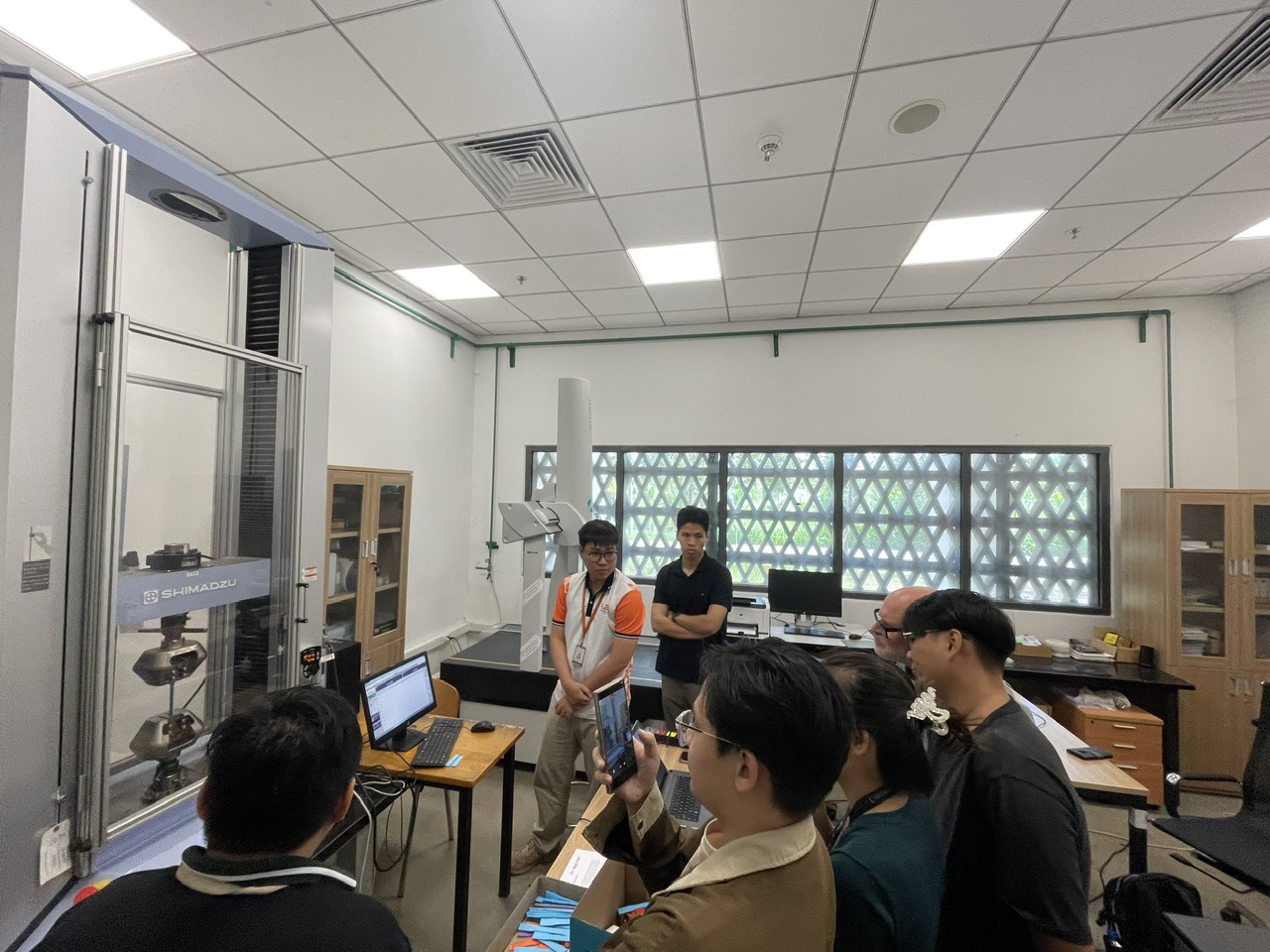
- Core Action: Conducting tensile testing using VGU's Universal Testing Machine (UTM) on standard polymer specimens.
- Academic Topics: Analyzing elastic and plastic deformation, plotting stress-strain curves, and calculating Young's modulus, yield strength, and elongation at break.
- Relevance: Understanding mechanical limits to predict structural reliability under external loads.
Activity 2: Rheometry & Polymer Melt Flow Behavior
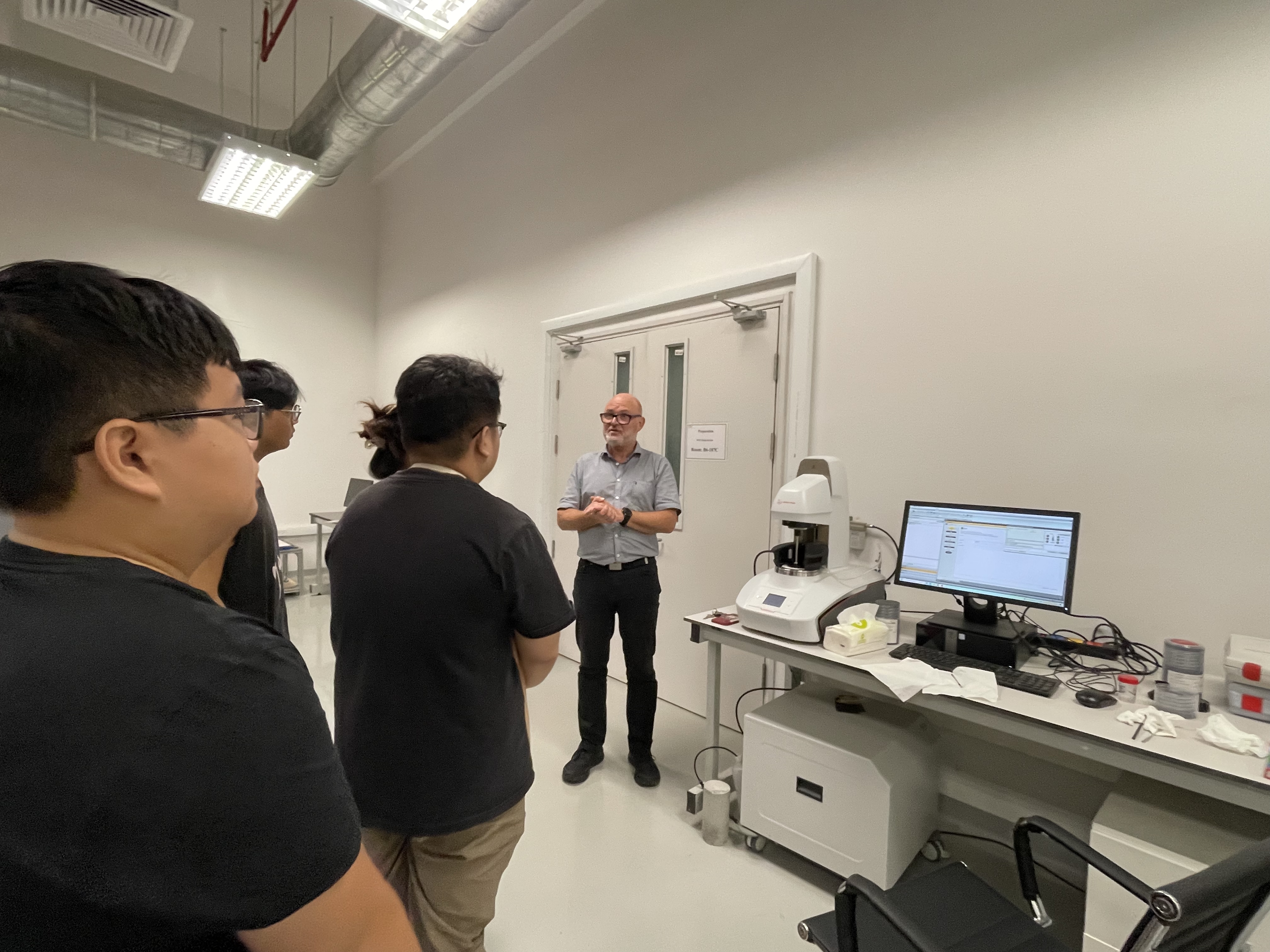
- Core Action: Operating a high-precision rotational rheometer to measure viscosity changes.
- Academic Topics: Monitoring viscosity dependence on temperature and shear rate, and analyzing non-Newtonian shear-thinning behavior.
- Relevance: Optimizing polymer melt flow for automated manufacturing processes like injection molding and extrusion.
Activity 3: High-Resolution Imaging via Scanning Electron Microscopy (SEM)
- Core Action: Preparing samples and conducting high-vacuum SEM imaging on polymer fracture surfaces.
- Academic Topics: Operating electron optics at the micro-nano scale, observing morphological features, micro-voids, and micro-cracks.
- Relevance: Understanding morphological features and analyzing structural failures to design tougher, more durable polymer blends.
!NOTEVGU Research Edge: Having a world-leading expert from the Fraunhofer Institute (IMWS) guide students through SEM fracture analysis and rheometry ensures our graduates master characterization techniques at a world-class level.
We congratulate our MSI 2024 cohort for their outstanding laboratory reports and rigorous analytical work throughout the course!