MSI2025 and GPE2025 Explore the Connection Between Materials and Production Through Additive Manufacturing
MSI2025 and GPE2025 Explore the Connection Between Materials and Production Through Additive Manufacturing
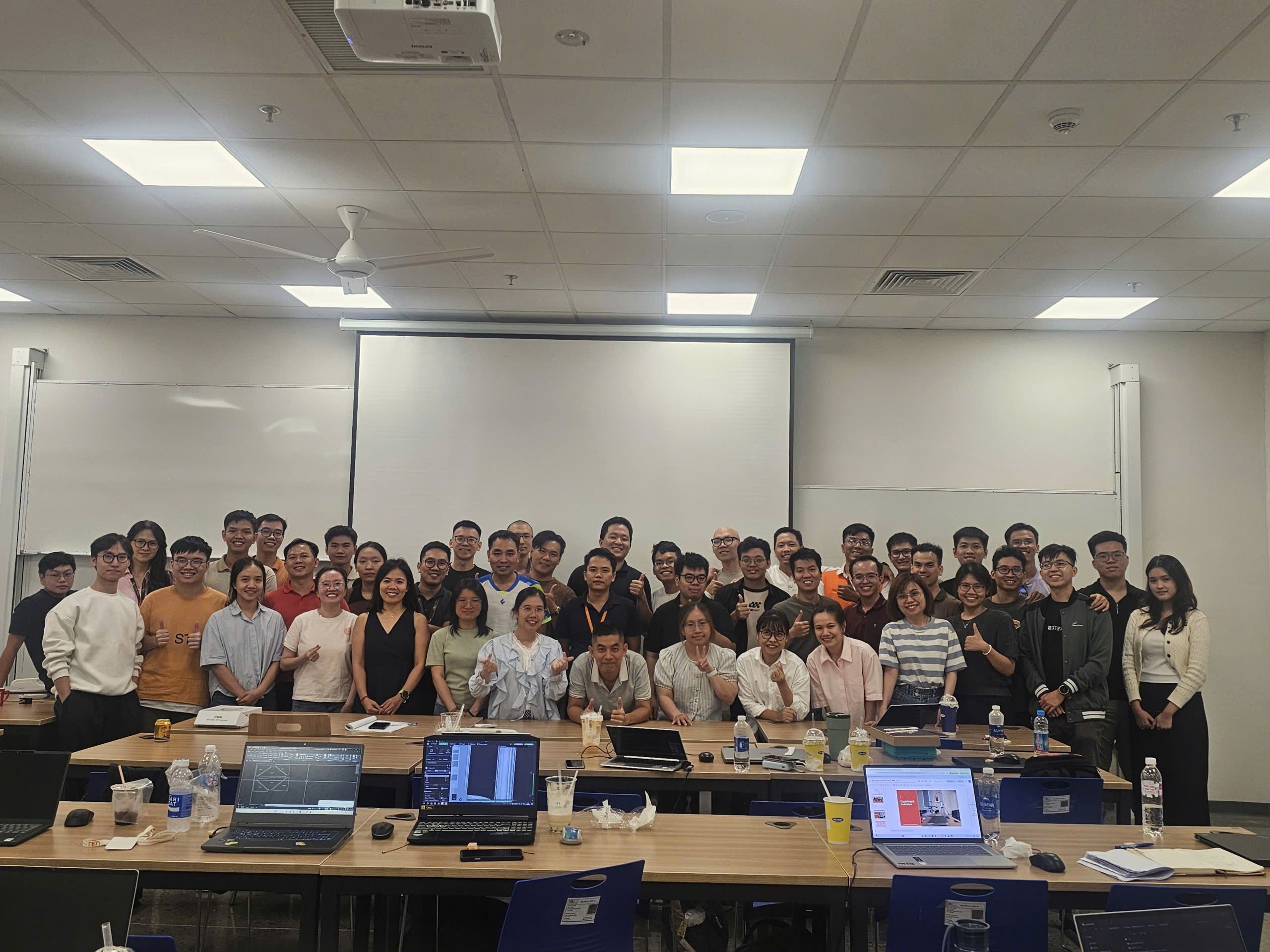
Students from the GPE2025 and MSI2025 intakes have recently completed the Additive Manufacturing course at Vietnamese-German University (VGU). Offered as an elective within the Master of Science in Materials Science (MSI) program, the course provided an interdisciplinary learning environment where materials science, digital design, manufacturing technology, and mechanical testing came together through practical activities.
From Digital Design to Physical Components
Additive manufacturing, commonly associated with 3D printing, enables components to be produced layer by layer based on digital models. However, understanding additive manufacturing involves much more than knowing how to operate a 3D printer.
Engineers must consider the relationships among material selection, component design, manufacturing processes, resulting structures, and the performance of the final product.
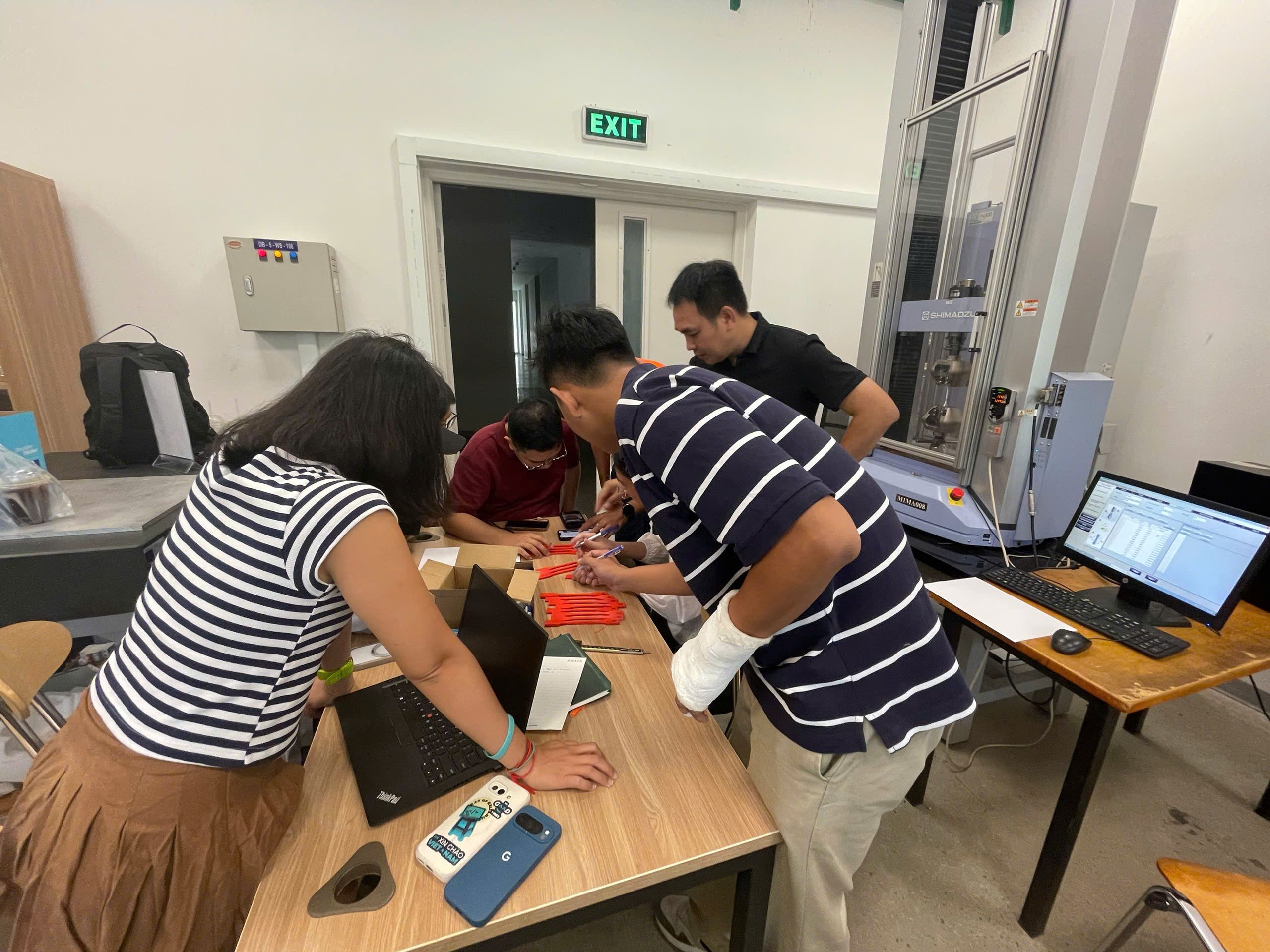
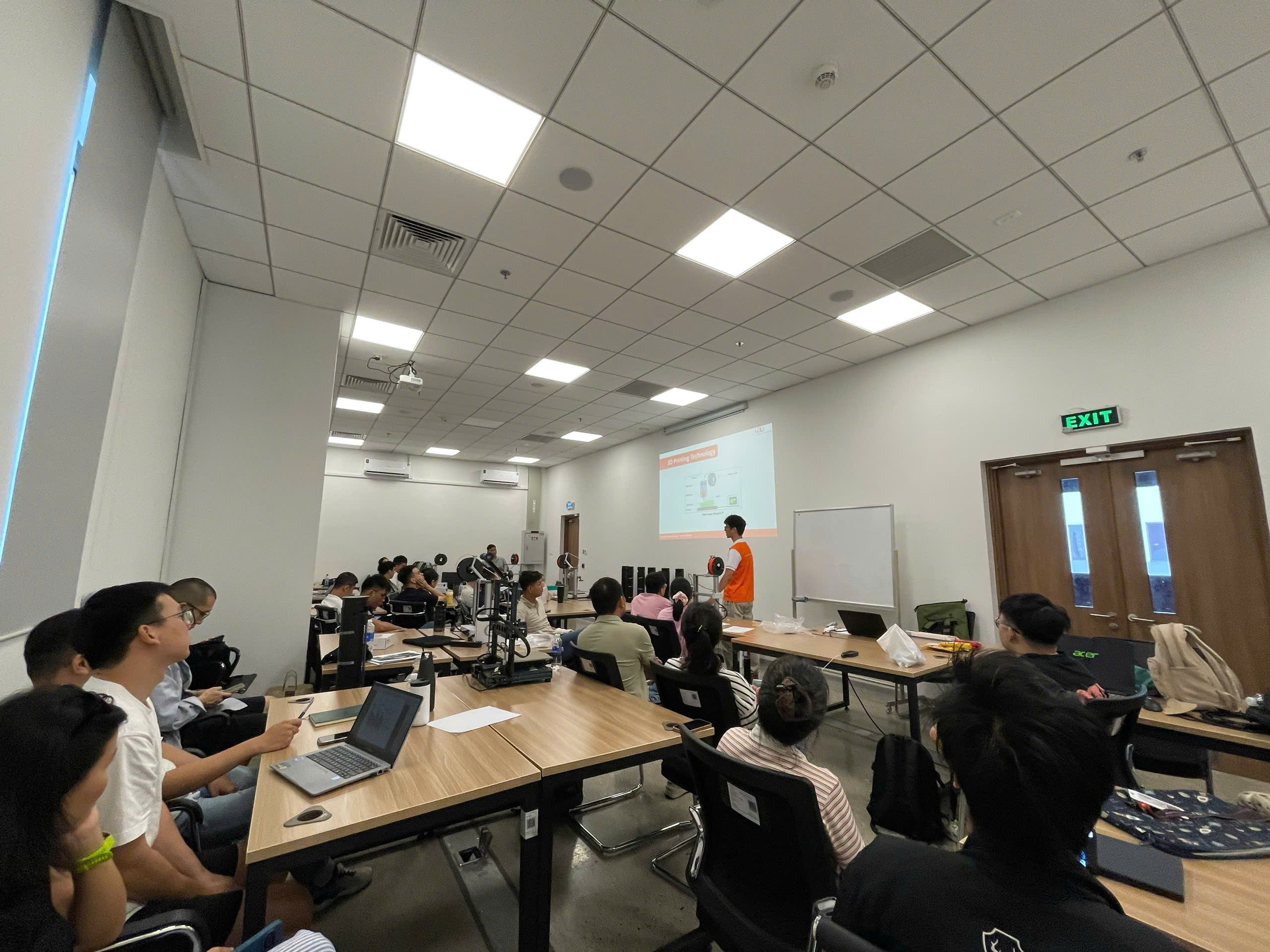
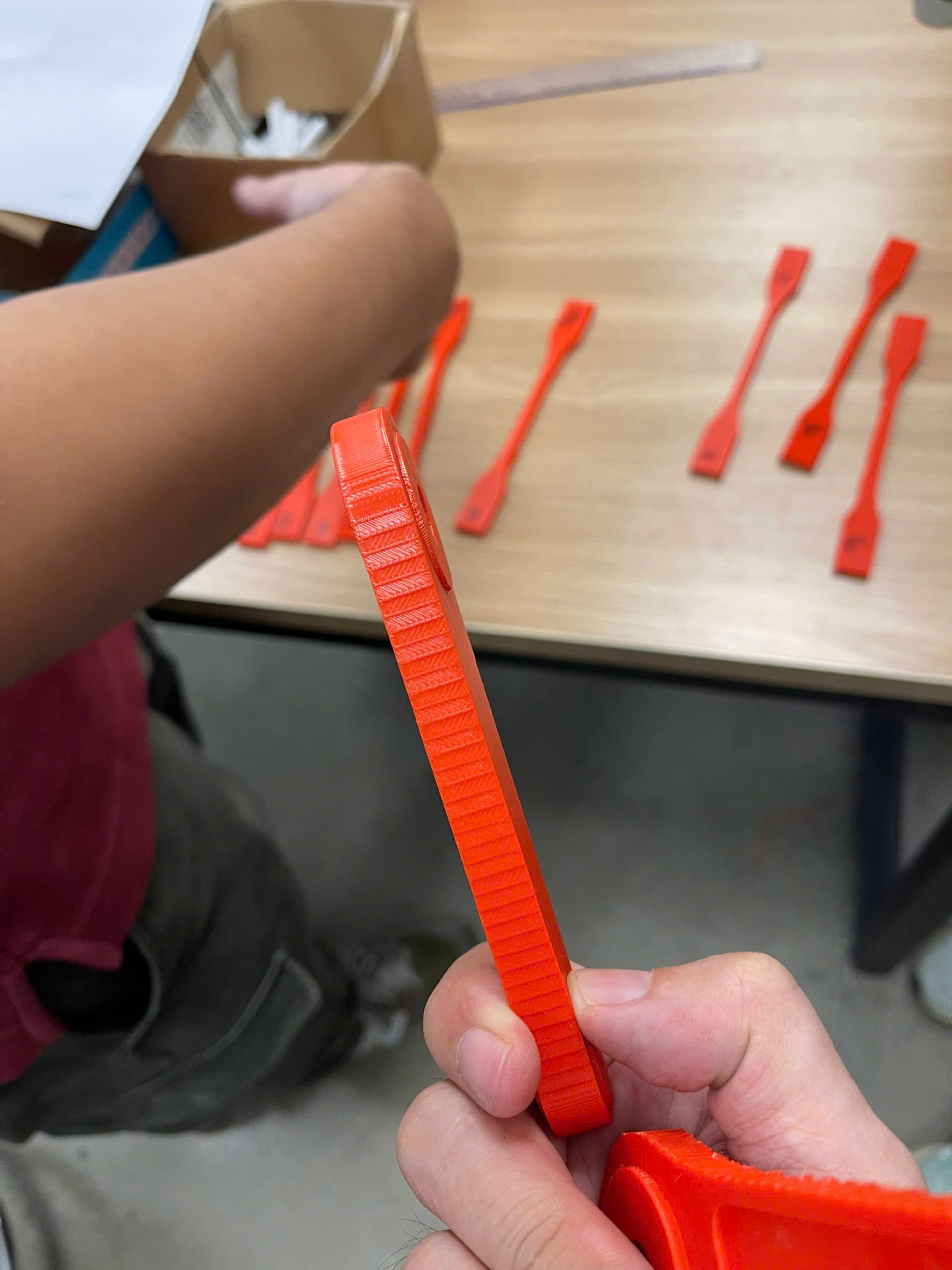
Throughout the course, students were introduced to different stages of the additive manufacturing workflow and gained hands-on experience with 3D printing technologies and equipment. They could observe how digital designs are transformed into physical components and how manufacturing decisions can influence the characteristics of printed specimens.
What Happens After a Component Is Printed?
Producing a physical component is only one part of the engineering process. Engineers must also determine whether the manufactured component performs as intended.
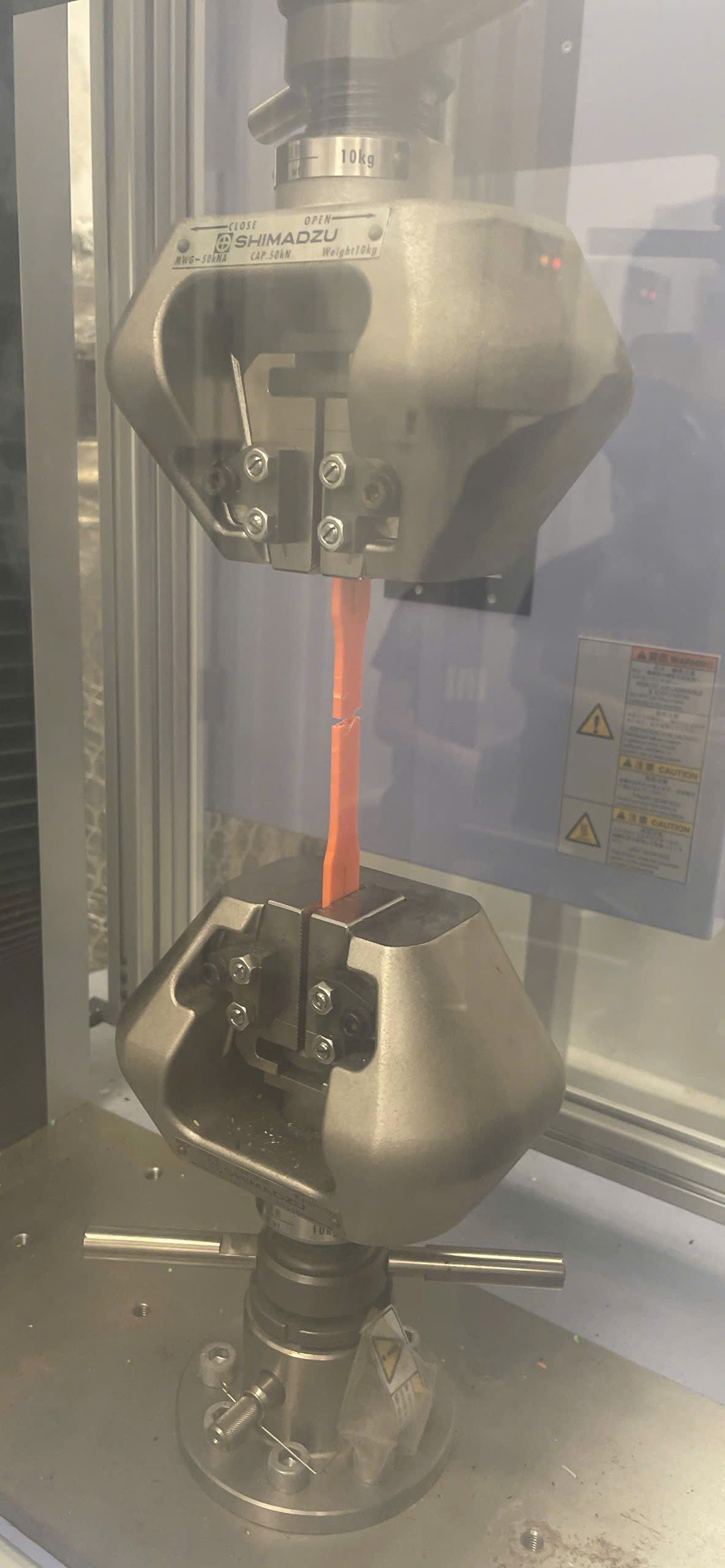
As part of the practical learning experience, students worked with mechanical testing equipment and observed tensile testing of manufactured specimens.
The experiments enabled students to examine how specimens deform and eventually fail under tensile loading, creating a direct connection between the manufacturing process and the mechanical behavior of the resulting component.
The activities illustrated one of the fundamental relationships in materials and manufacturing engineering:
Material → Manufacturing Process → Structure → Properties → Performance
Changes in material, design, or manufacturing conditions can affect the resulting structure of a component, which can subsequently influence its mechanical properties and engineering performance.
When Materials Science Meets Production Engineering
A distinctive feature of this course was the participation of students from both MSI2025 and GPE2025, creating an interdisciplinary classroom that brought together two complementary perspectives.
For MSI students, Additive Manufacturing provides an opportunity to investigate how materials behave during emerging manufacturing processes and how processing conditions influence the properties and performance of manufactured components.
For GPE students, the course offers exposure to advanced manufacturing technology from a production engineering perspective, connecting product design and manufacturing processes with quality evaluation and potential industrial applications.
The interaction between the two groups reflects the increasingly interdisciplinary nature of modern manufacturing. Future engineers and production professionals need to understand not only individual technologies but also the relationships between materials, manufacturing processes, product performance, and production systems.
Learning Engineering by Doing
The Additive Manufacturing course represents an important aspect of engineering education at VGU: combining theoretical knowledge with practical experimentation.
Rather than simply learning what additive manufacturing is, students experienced multiple stages of the engineering workflow — from understanding the manufacturing process and producing physical specimens to testing and examining their resulting mechanical behavior.
For GPE2025 and MSI2025, completing the course therefore represents more than learning about 3D printing. It provides an opportunity to understand how decisions made at the material, design, and manufacturing stages ultimately converge in the performance of a real engineering product.
Sometimes, even a small 3D-printed tensile specimen can tell the story of an entire manufacturing process.