Lab Training: Cement & Concrete Mix Design and Early-Stage Hydration with Prof. Thomas Bier
Lab Training: Cement & Concrete Mix Design and Early-Stage Hydration with Prof. Thomas Bier
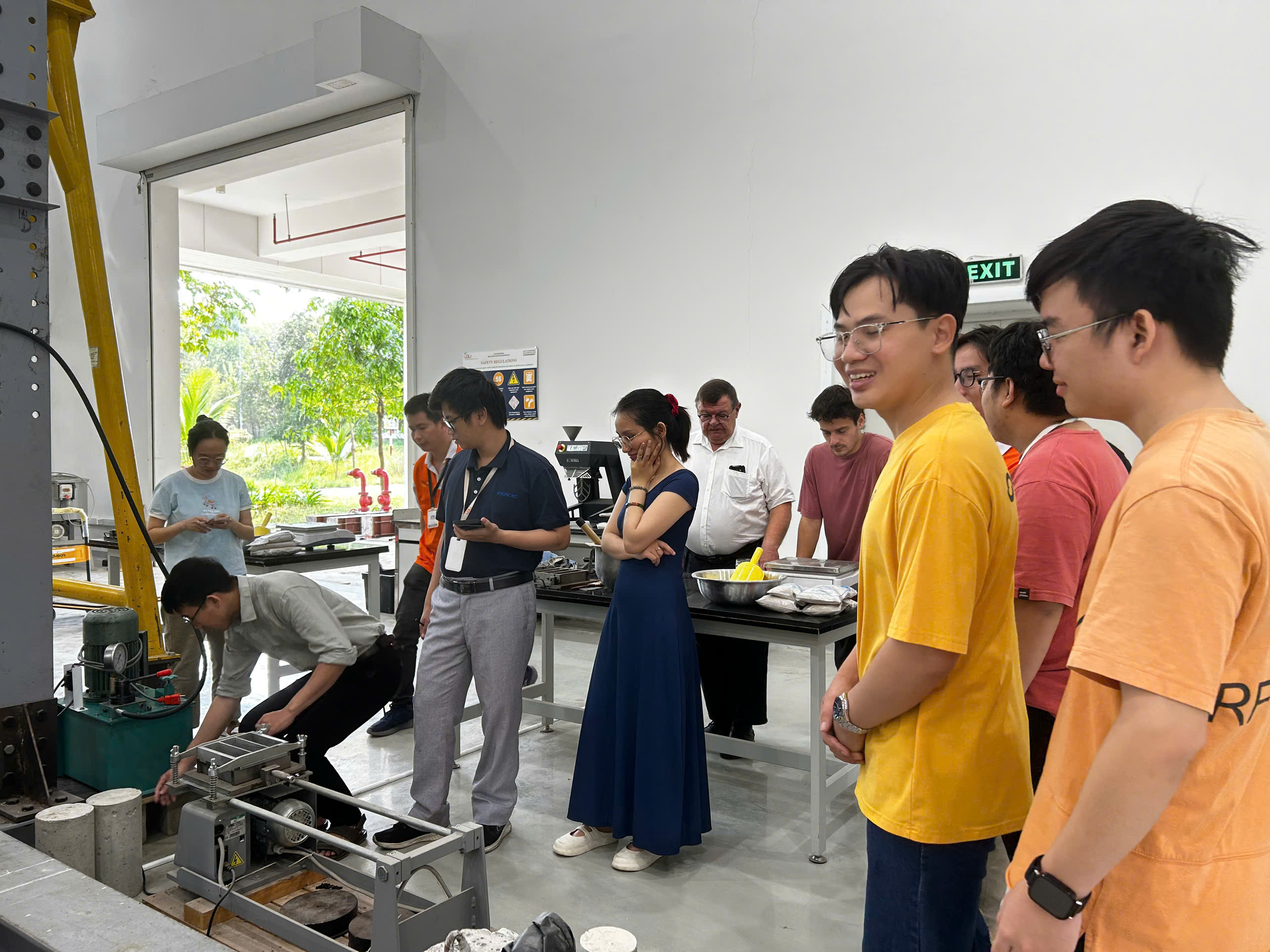
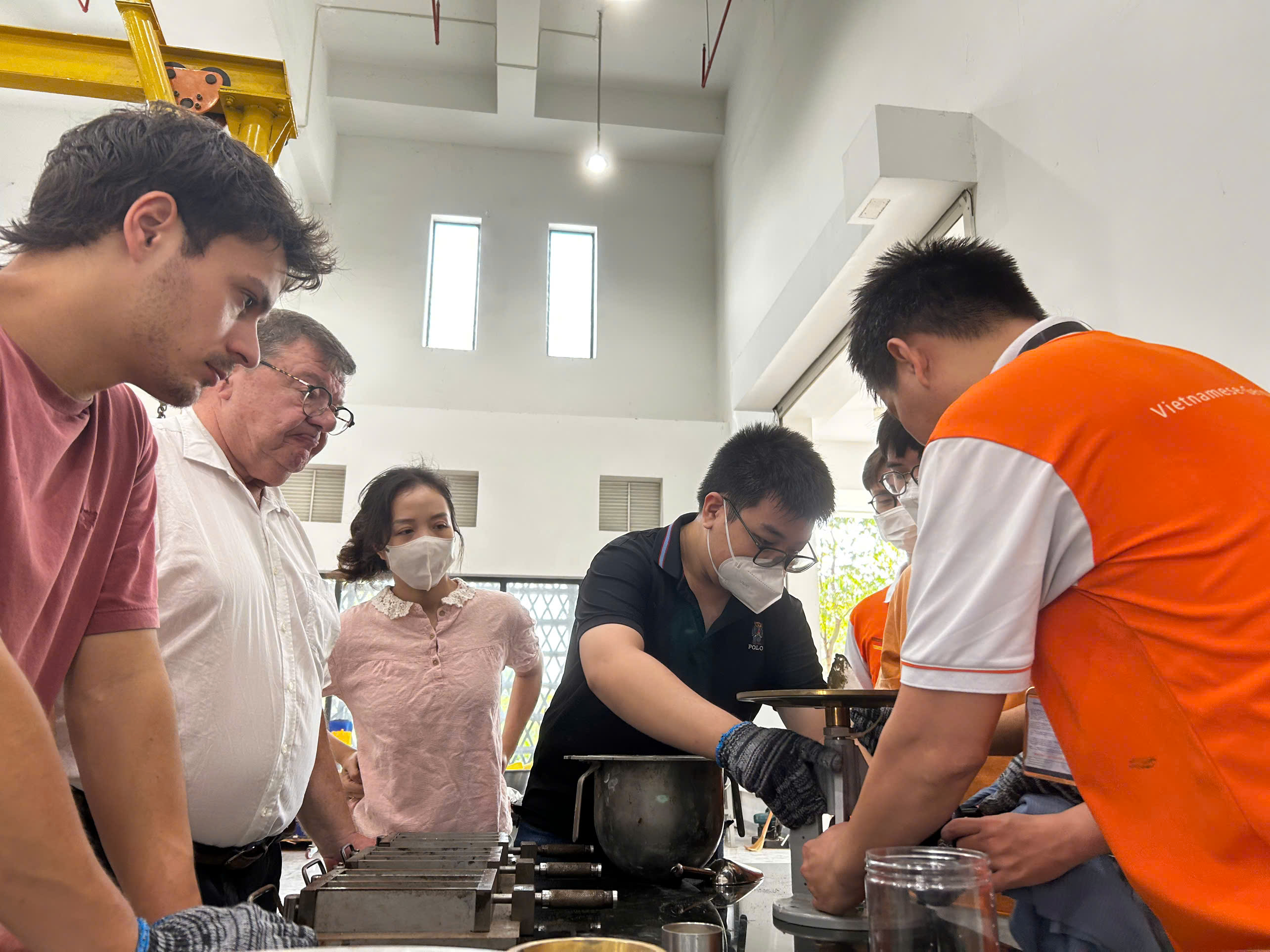
On January 30, 2026, students of the Master of Science in Materials Science (MSI) program at VGU participated in a rigorous, hands-on laboratory session for the Inorganic, Non-Metallic Binders module.
Supervised by Prof. Dr.-Ing. Thomas Bier, our flying faculty from Germany, the session allowed students to immediately translate theoretical thermodynamics of binder hydration into physical cement and mortar formulations.
Practicing Modern Binder Engineering
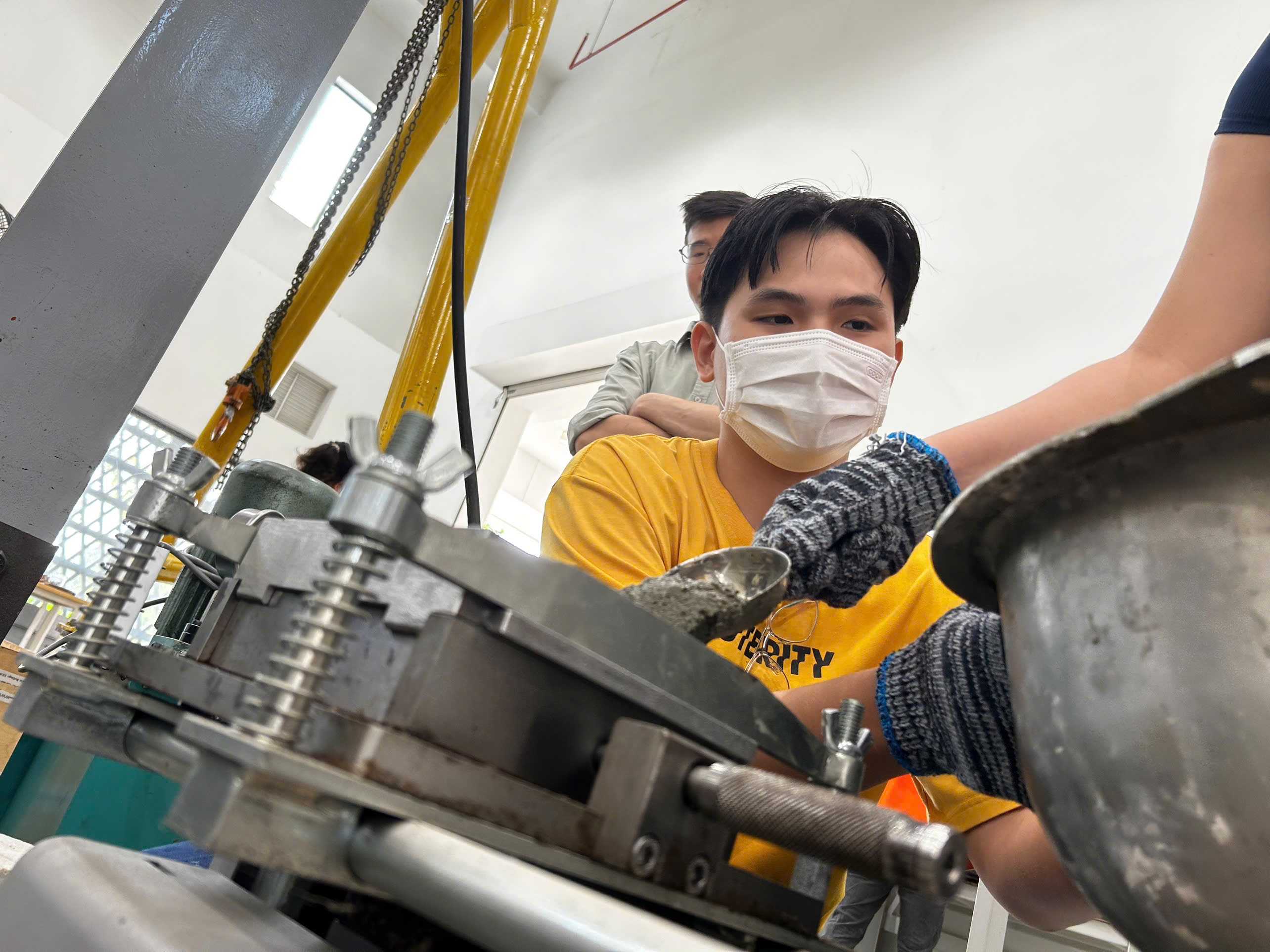
Operating in VGU's advanced concrete technology laboratory, student groups conducted key industrial characterization and mixing steps:
- High-Precision Proportioning: Calculating and weighing water-to-cement ($w/c$) ratios to control mechanical strength and porosity.
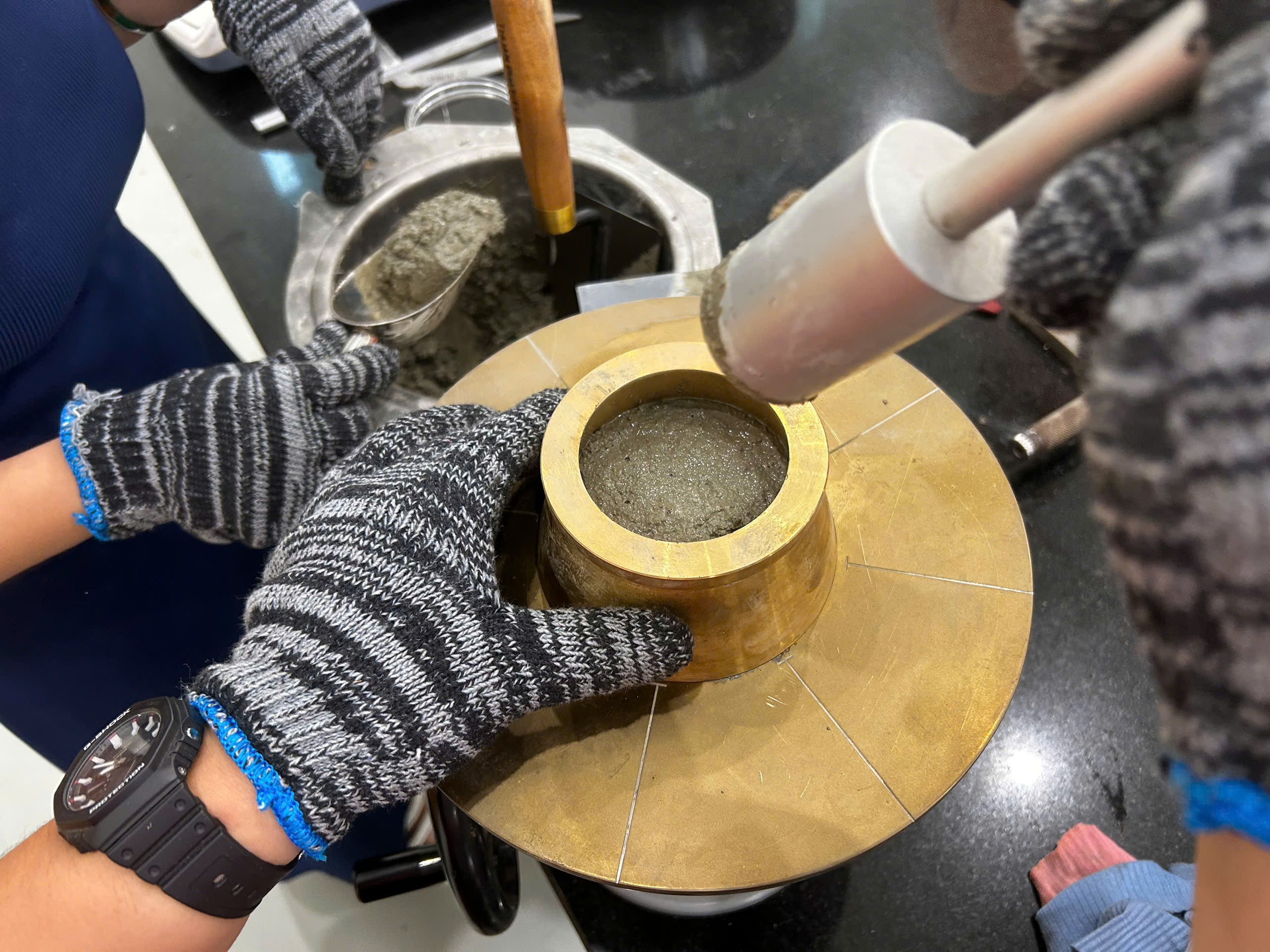
- Homogeneous Mixing: Mixing dry cement, fine aggregates, and functional admixtures to achieve targeted rheological properties.
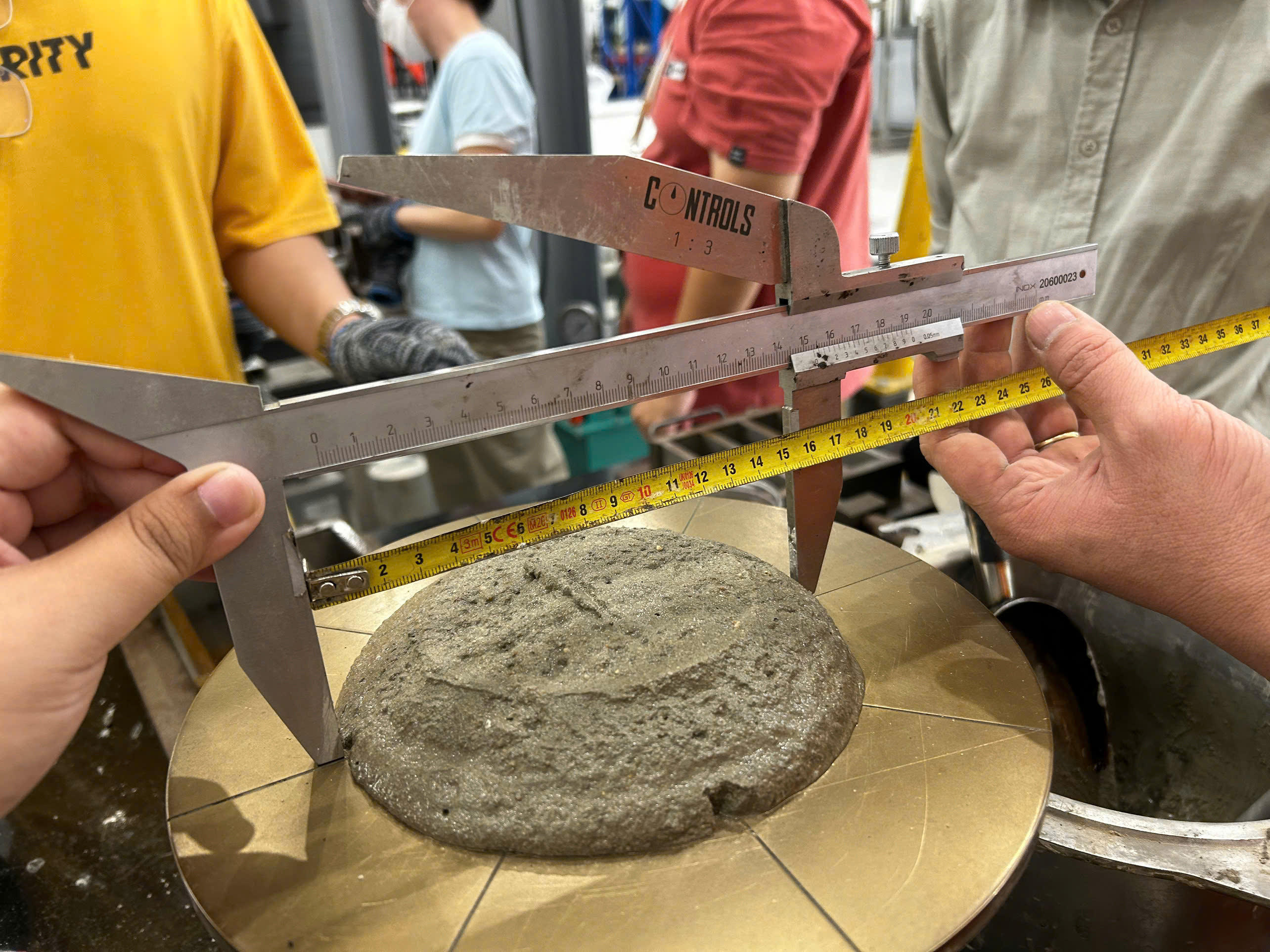
- Workability & Flow Assessment: Utilizing flow tables to measure slump, workability, and the yield stress of fresh mortar mixtures.
- Casting & Setting Analysis: Casting fresh mixtures into professional standard molds, monitoring setting behavior, and observing early-stage microstructure consolidation.
!NOTEMSI Takeaway: Cement is not just a building material; it is a complex, chemically active mineral system. Understanding how superplasticizers and accelerators alter early-stage calcium-silicate-hydrate (C-S-H) gel growth is key to designing high-performance concretes.
Building Real-World Competency
Through these practical, collaborative exercises, VGU students gain deep, quantitative insights into concrete mix design, microstructural development, and durability control.
This hands-on training forms a strong foundation for future research in green concrete formulations, sustainable geopolymers, and advanced binder materials—preparing our graduates to lead construction materials R&D both in academia and global industries.