Lab Training: Quenching, Tempering, and Aluminum Precipitation Hardening
Lab Training: Quenching, Tempering, and Aluminum Precipitation Hardening
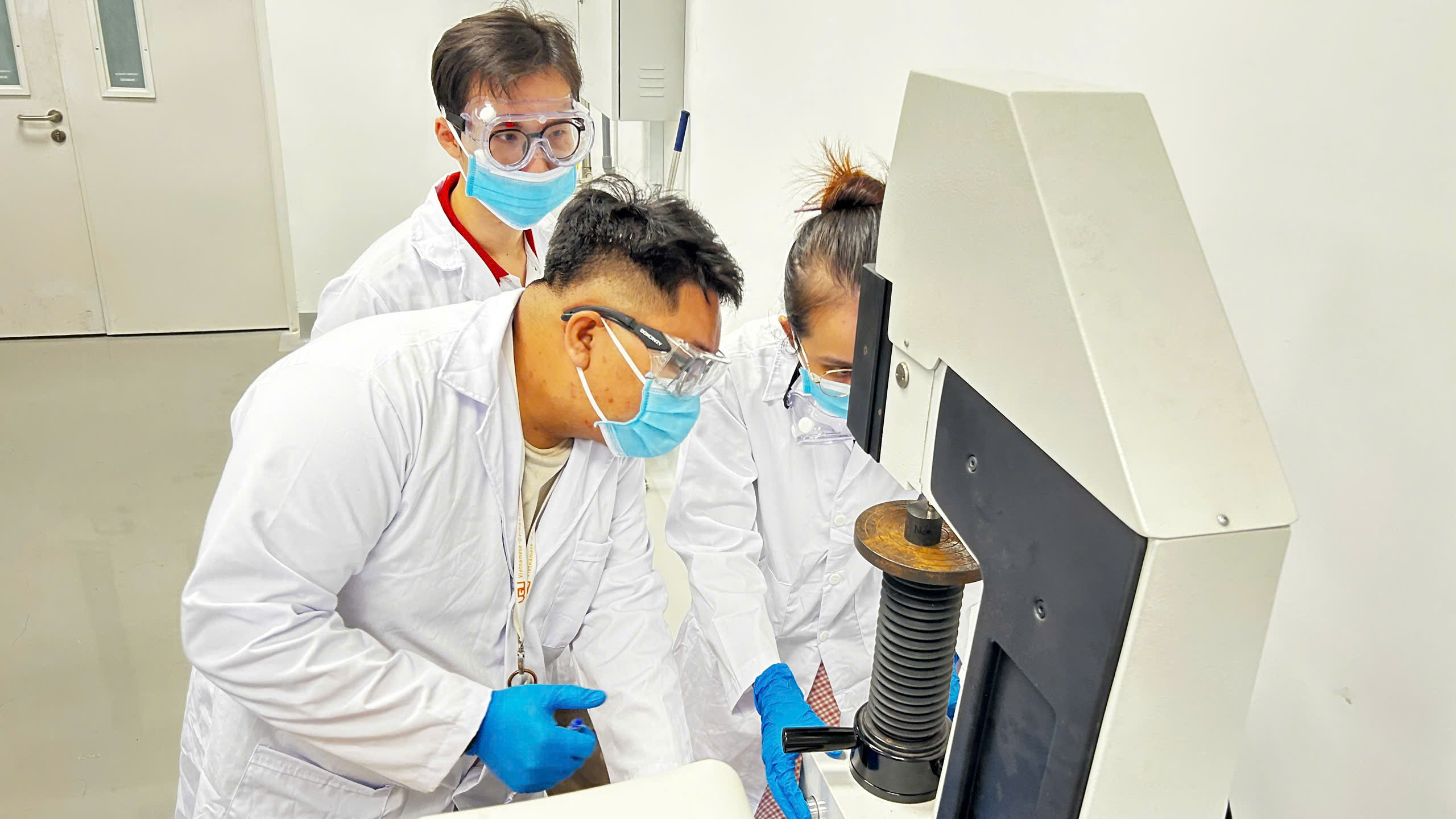
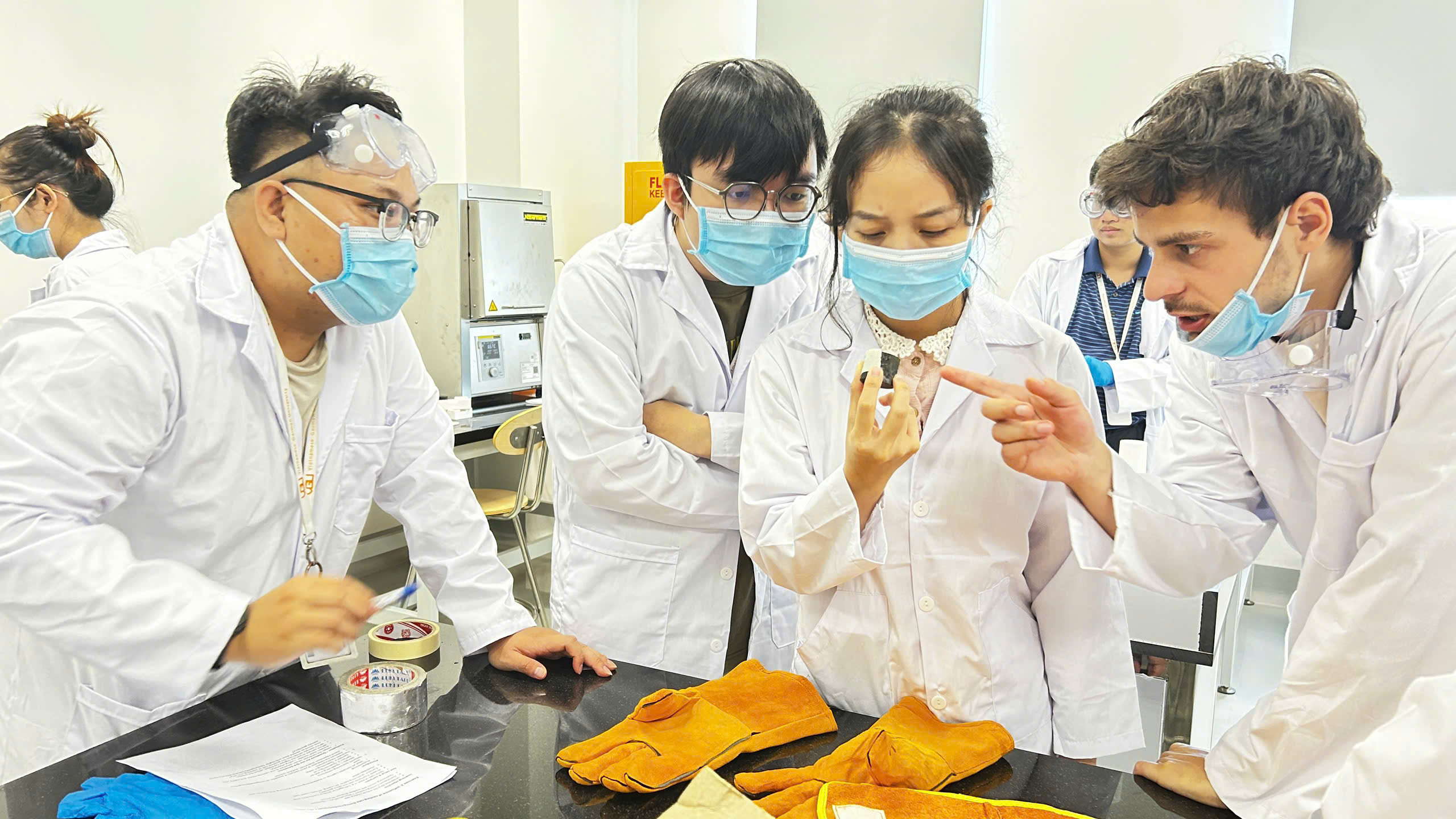
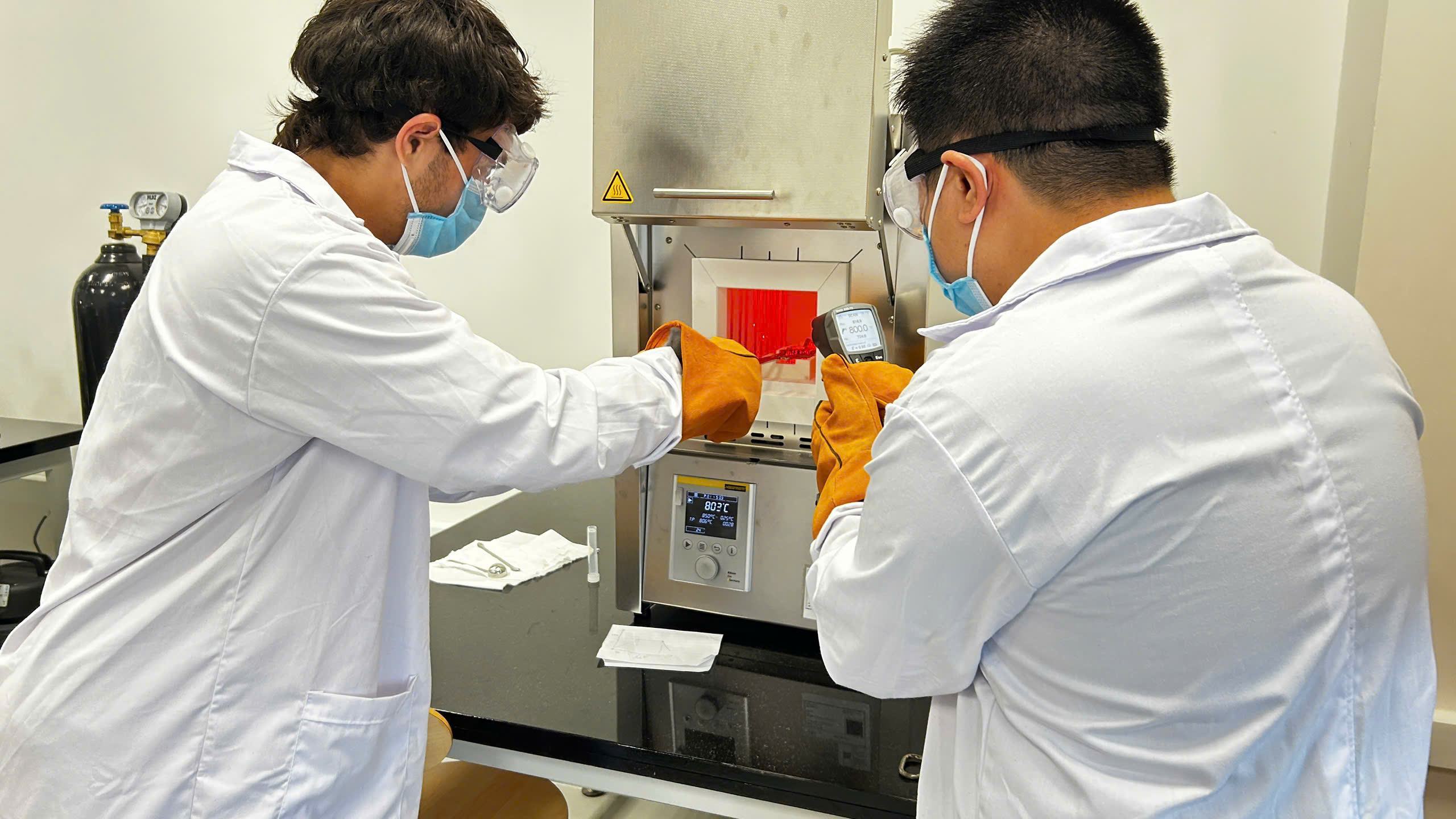
As a core practical component of the Heat Treatment course, students from the MSI Intake 2024 and Intake 2025 cohorts executed a series of intensive metallurgical experiments in our state-of-the-art materials characterization labs.
These experiments are designed to directly bridge theoretical phase transformations with real-world mechanical performance, showing students how heat and cooling media can be used to engineer exact metal microstructures.
Core Metallurgical Lab Exercises
Students rotated through four distinct experimental modules, utilizing professional furnace systems, polishing stations, and hardness testers:
Exercise 1: Hardening & Tempering of C45 Carbon Steel
- Core Activity: Heating C45 specimens into the single-phase austenite region, quenching to lock in a fully martensitic structure, followed by tempering runs at varied temperatures.
- Goal: Analyzing the structural transition from soft annealed ferrite-pearlite to hard brittle martensite, and finally to ductile tempered martensite.
- Assessment: Quantitative evaluation of how tempering temperature systematically lowers hardness while restoring toughness.
Exercise 2: Influence of Quenching Media on Critical Cooling Rates
- Quenching Media Tested: Air, Oil, and Water.
- Goal: Exploring the thermodynamic concept of the critical cooling rate required to bypass the pearlite/bainite noses on Time-Temperature-Transformation (TTT) diagrams.
- Assessment: Correlating cooling speeds directly to microstructure and hardness, while analyzing structural risks such as residual stresses and quenching cracks.
Exercise 3: Hardenability of Alloyed Steels (C45 vs. 42CrMo4)
- Goal: Subjecting plain carbon C45 and low-alloy 42CrMo4 structural steel to identical quenching runs.
- Assessment: Evaluating how chromium ($Cr$) and molybdenum ($Mo$) retard diffusion, shifting TTT curves and allowing thick parts to harden completely through. Students gain critical insights into material selection and engineering trade-offs.
Exercise 4: Precipitation Hardening of Lightweight Aluminum Alloys
- Goal: Performing solution annealing followed by rapid quenching and artificial/natural aging of high-strength aluminum specimens.
- Assessment: Plotting age-hardening curves to monitor how coherent nanometer-sized precipitates pin dislocations, dramatically increasing the yield strength of lightweight structures.
!NOTEWhy this is critical for MSI graduates: Heat treatment is the heart of physical metallurgy. Gaining hands-on control over microstructures via furnaces and hardness testing prepares VGU graduates to step directly into high-tech R&D, aerospace, and advanced manufacturing roles globally.
We congratulate our students on their active participation and excellent research-grade reports!