Mechanics of Materials: Constitutive Modeling & Fracture Mechanics Student Presentations
Mechanics of Materials: Constitutive Modeling & Fracture Mechanics Student Presentations
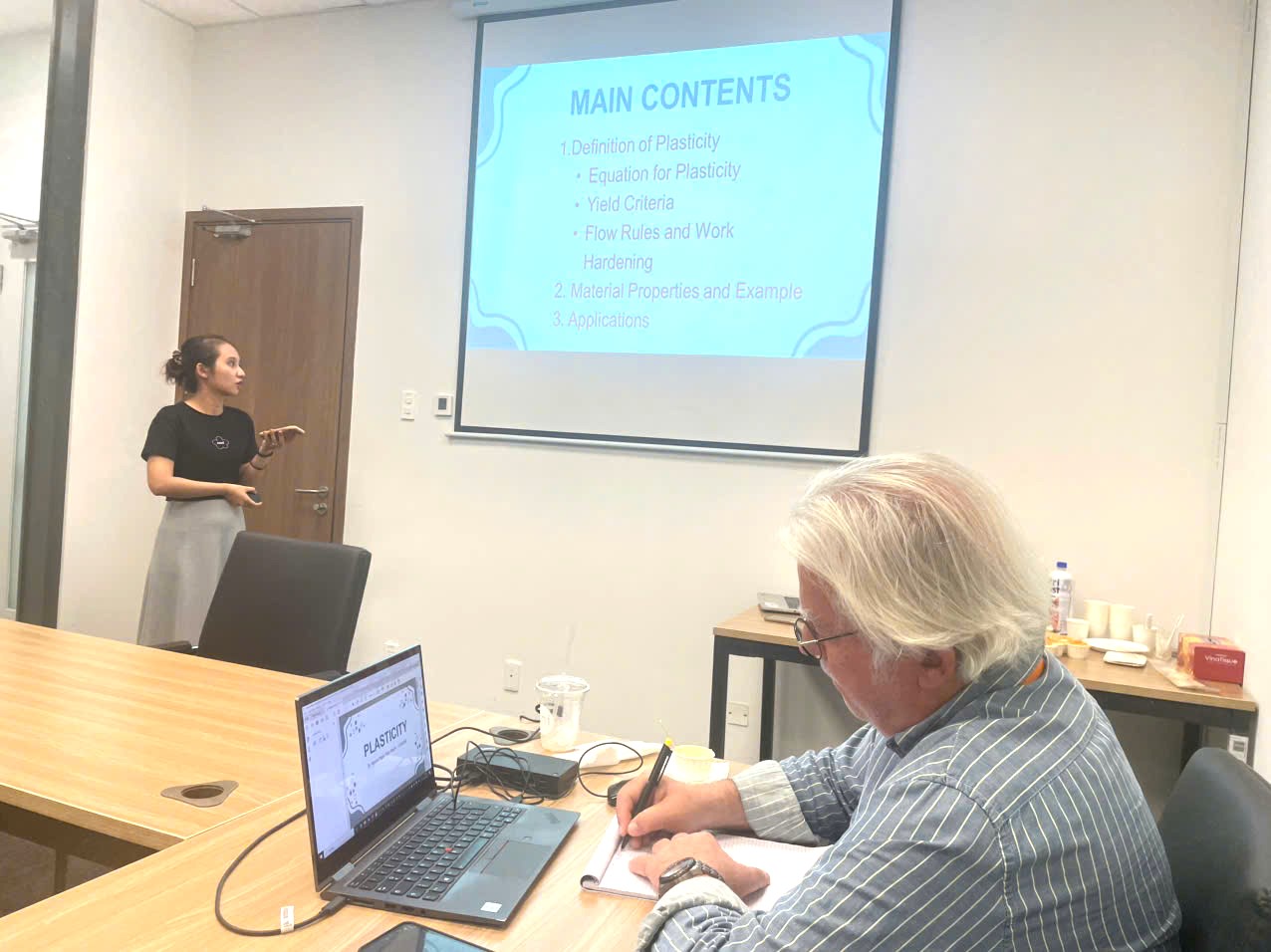
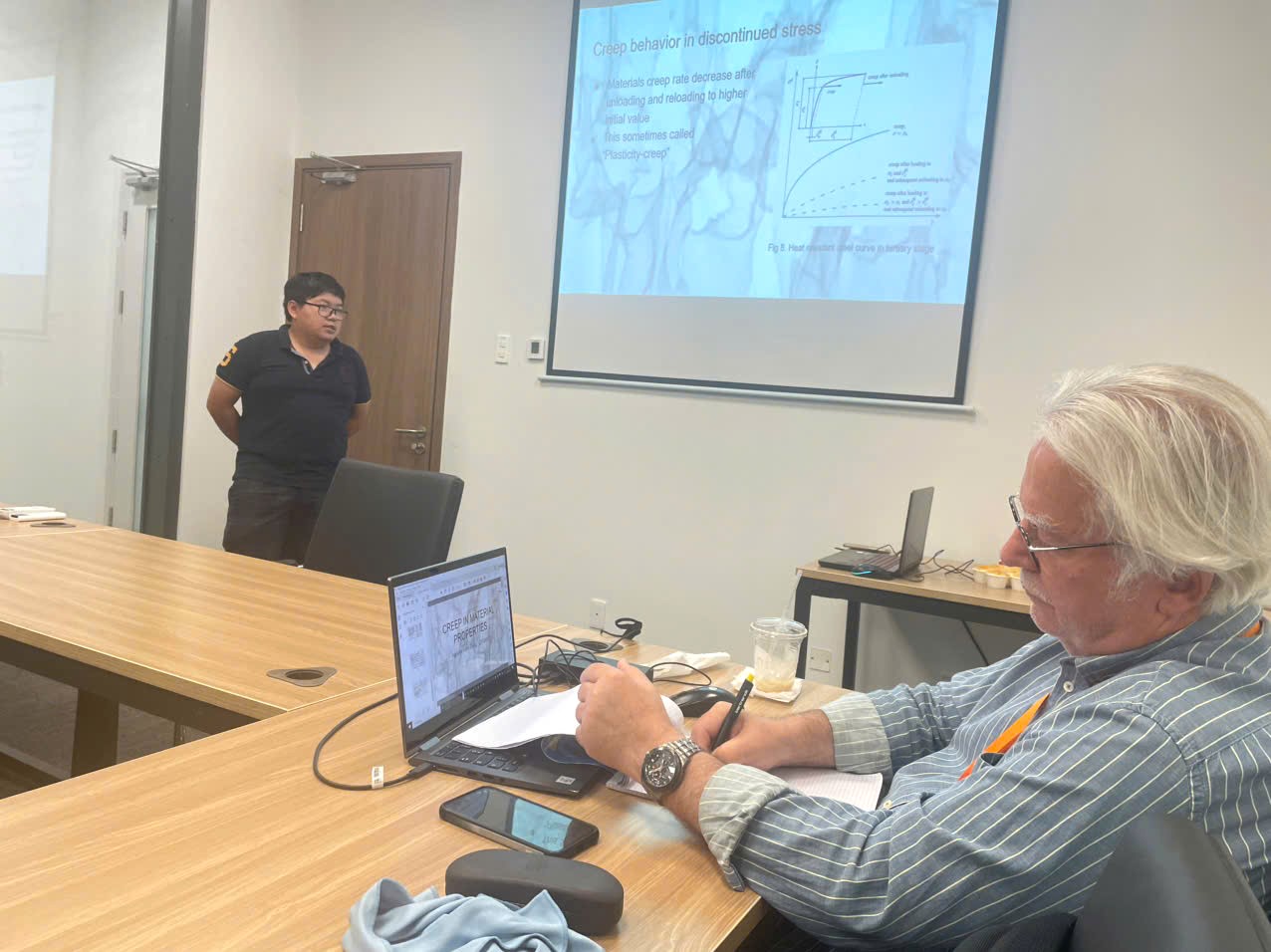
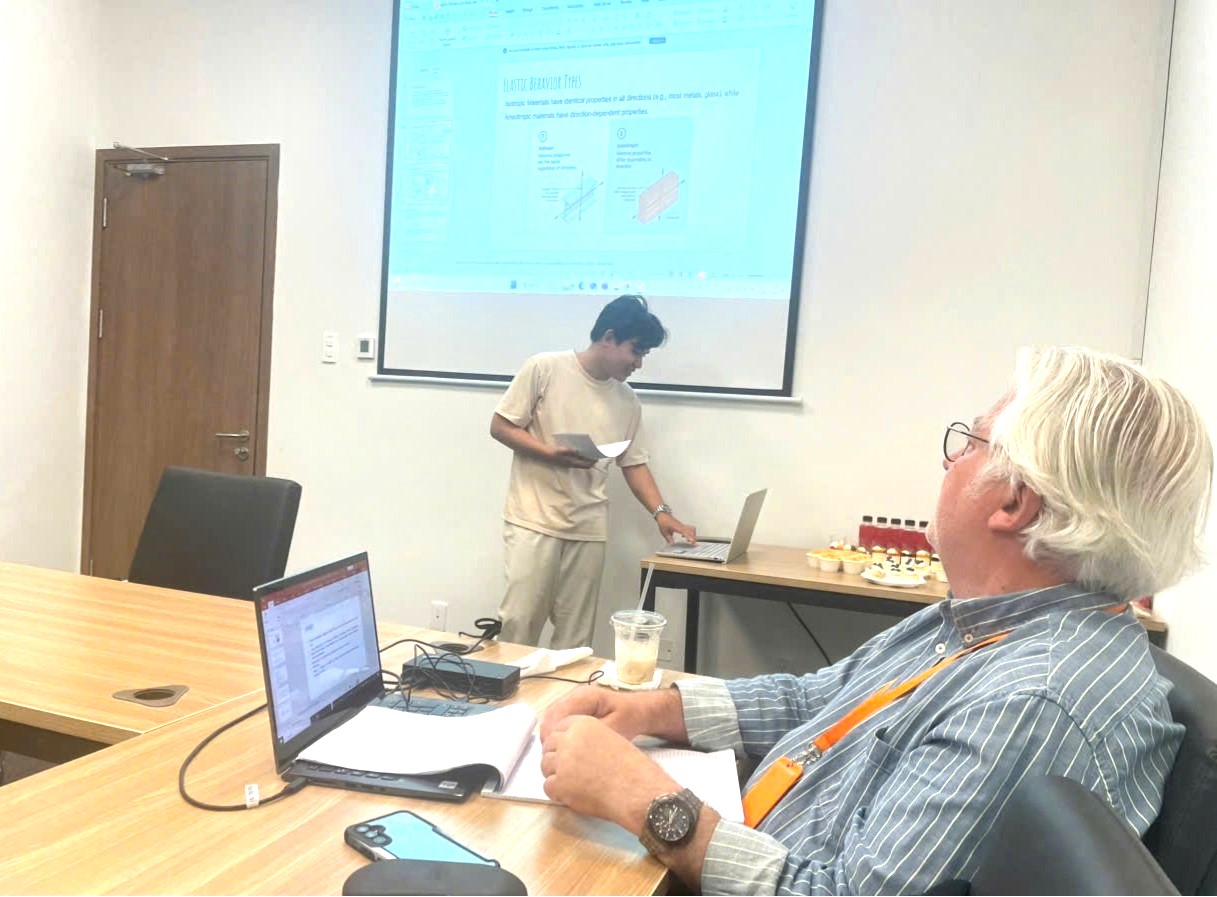
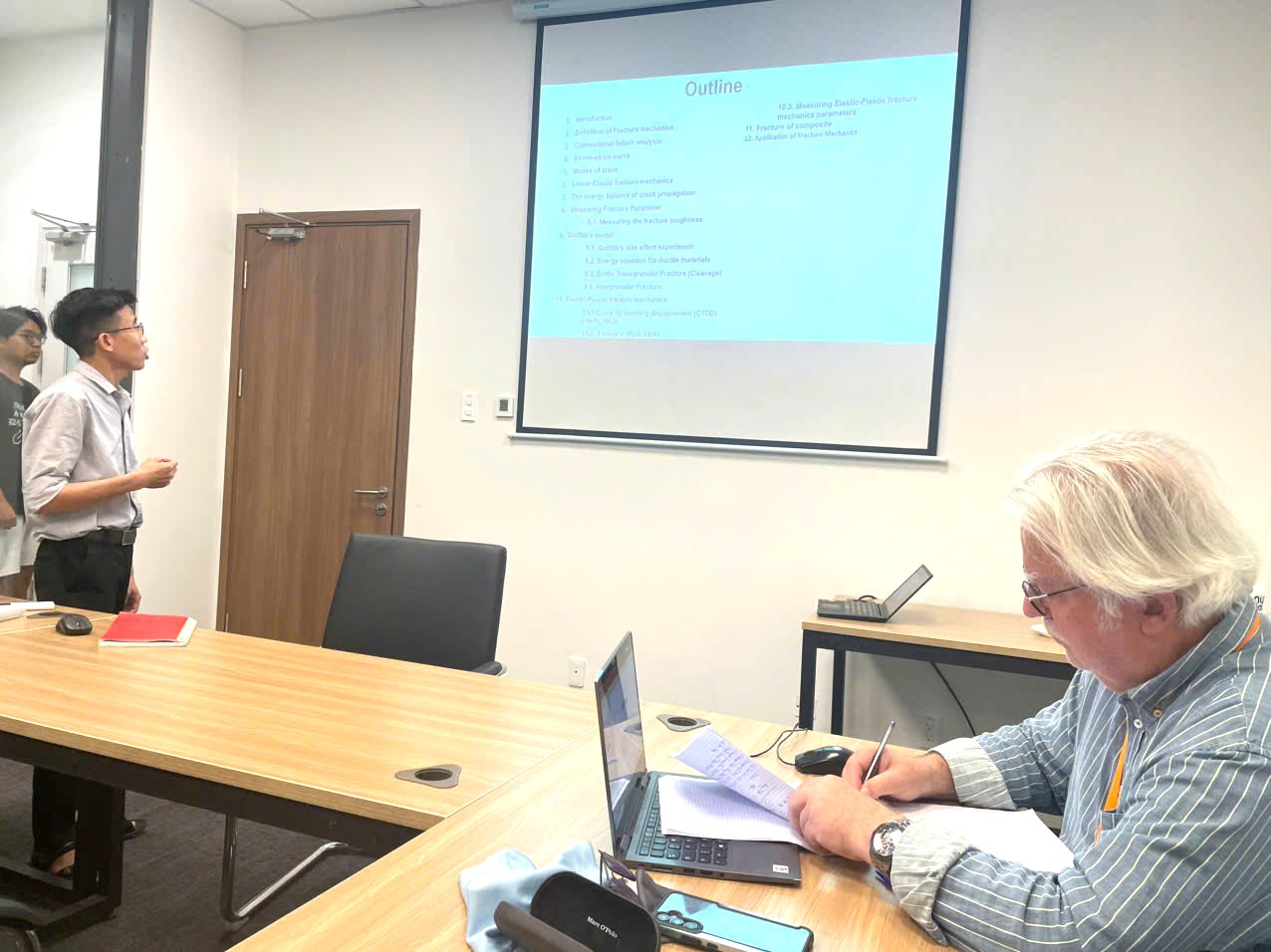
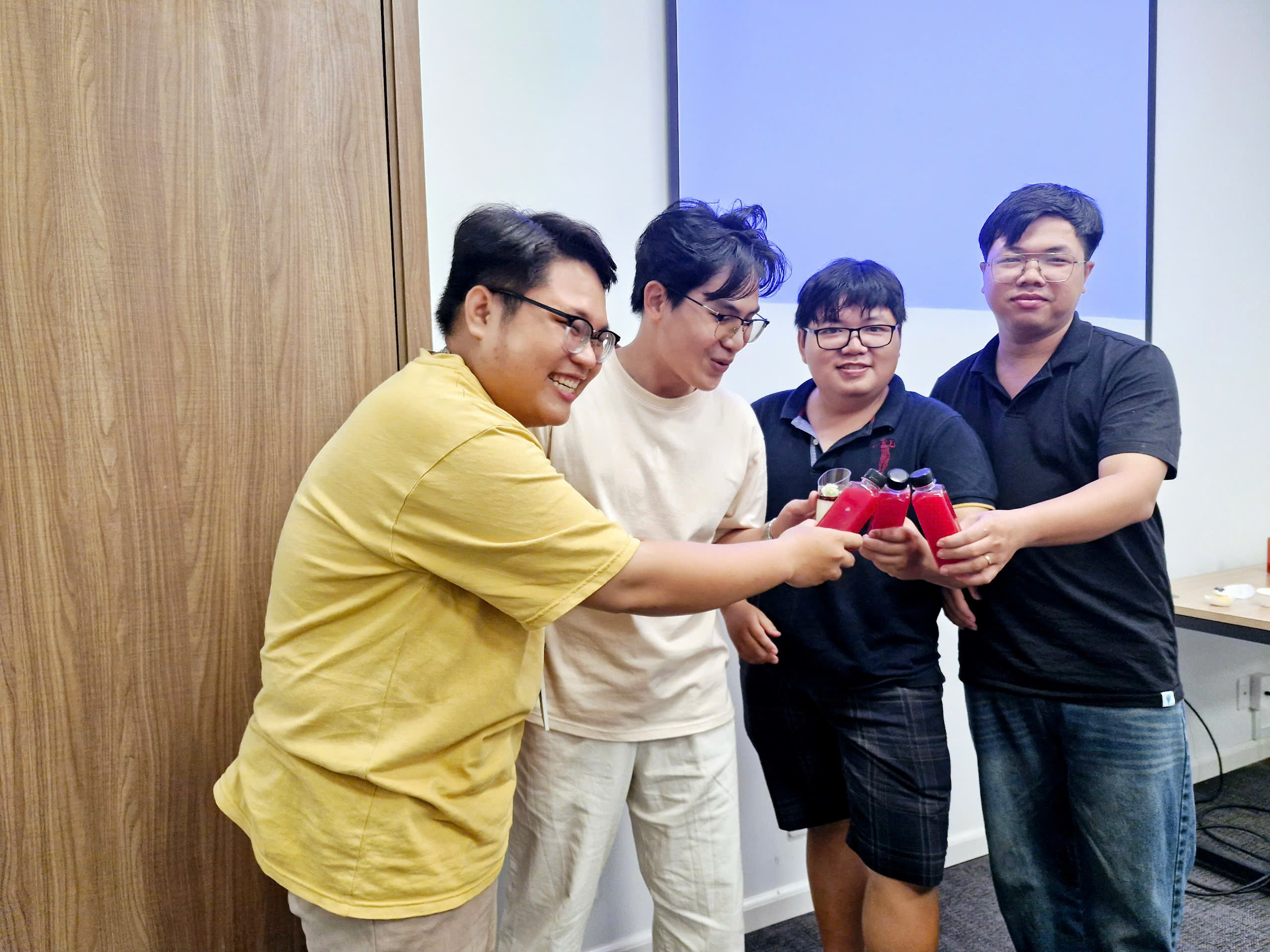
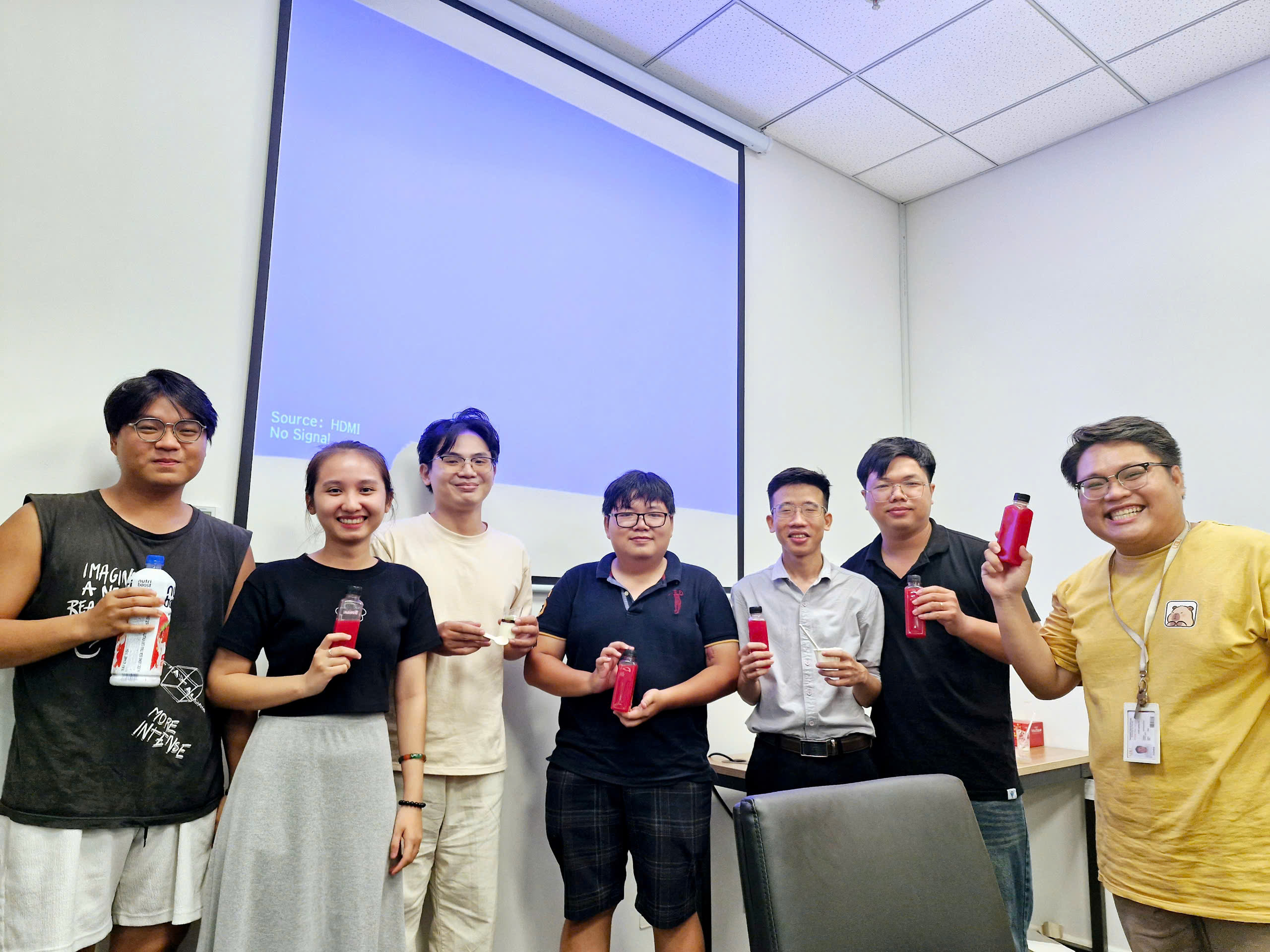
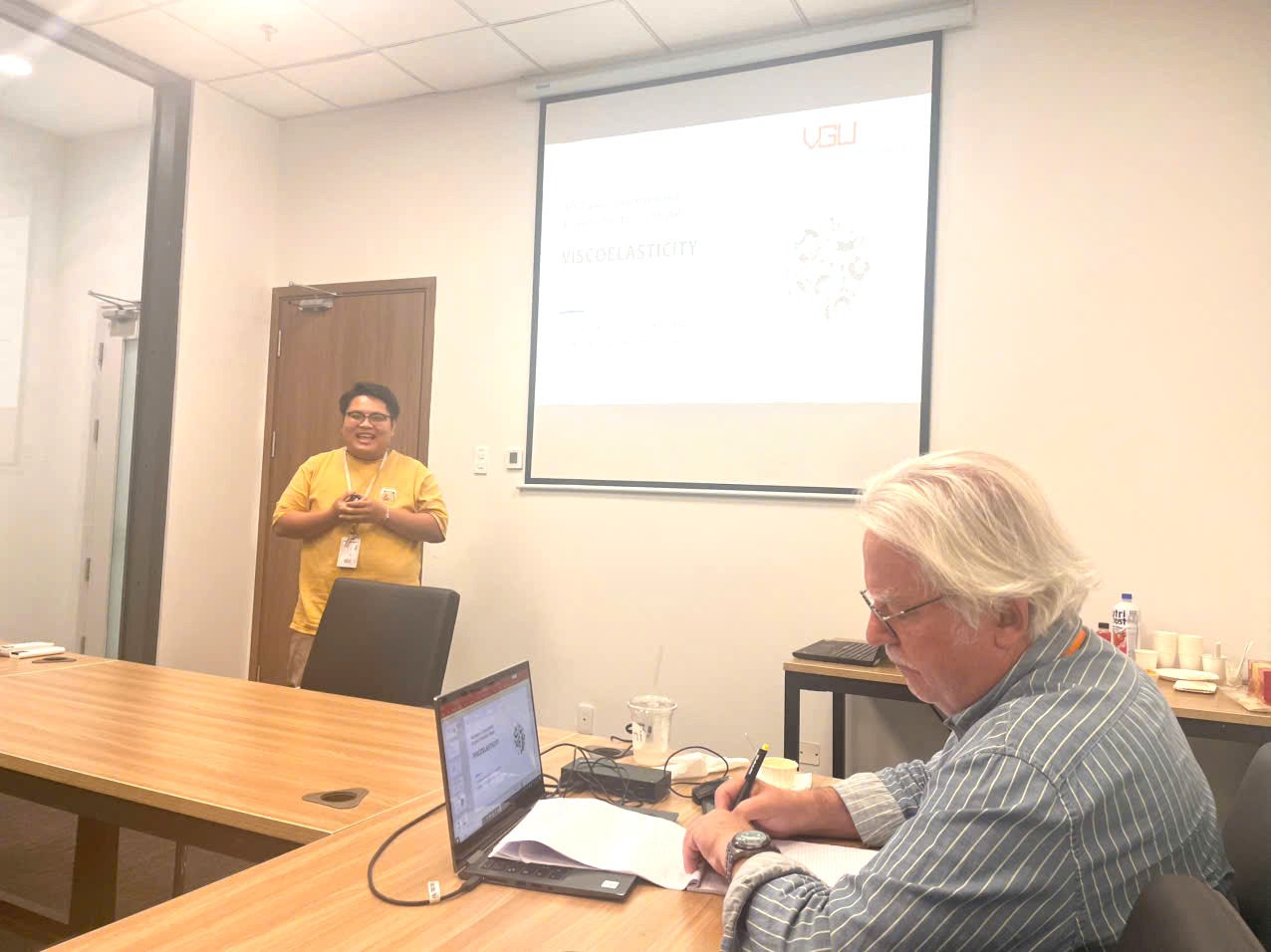
At the conclusion of the intensive Mechanics of Materials and Fracture Mechanics module, Master of Science in Materials Science (MSI) students at VGU completed their coursework not through a traditional written exam, but through a series of professional scientific presentations, talks, and open discussions.
This interactive format allowed students to demonstrate their deep understanding of advanced structural behavior, constitutive models, and material failures through active learning and scientific exchange.
The Scientific Core: What Our Students Mastered
Throughout the module, students explored the mathematical and physical principles governing how solid materials deform and fail under complex stress states:
- Elasticity & Plasticity: Formulating stress-strain relations beyond the linear elastic limit to model permanent material deformation.
- Creep & Rheology: Developing time-dependent viscoelastic and viscoplastic models to predict high-temperature structural deformation.
- Yield & Failure Criteria: Implementing classical yield criteria (Von Mises, Tresca) to identify safe loading boundaries.
- Linear Elastic Fracture Mechanics (LEFM): Analyzing singular stress fields near notch boundaries and sharp crack tips.
- Stress Intensity Factors ($K_I$, $K_$, $K_$): Calculating critical energy release rates and identifying conditions for unstable crack propagation.
!NOTEMSI Takeaway: Combining pure solid mechanics theory with finite element simulation (FEA) empowers our students to solve critical industrial challenges—from predicting fatigue limits in aircraft wings to avoiding catastrophic brittle fracture in steel structures.
Building Key Professional Competencies
By shifting the final evaluation from a standard exam to a presentation-based symposium, the MSI program reinforces essential professional skills:
- Scientific Communication: Translating complex tensor calculus and finite element results into clean, comprehensible slides.
- Critical Debate: Defending modeling choices, boundary conditions, and parameter identifications during peer and faculty Q&A.
- Collaboration & Teamwork: Working in multidisciplinary engineering cohorts to solve multi-variable mechanical problems.
Congratulations to all MSI students for their outstanding presentations and highly active engagement throughout this challenging course!